
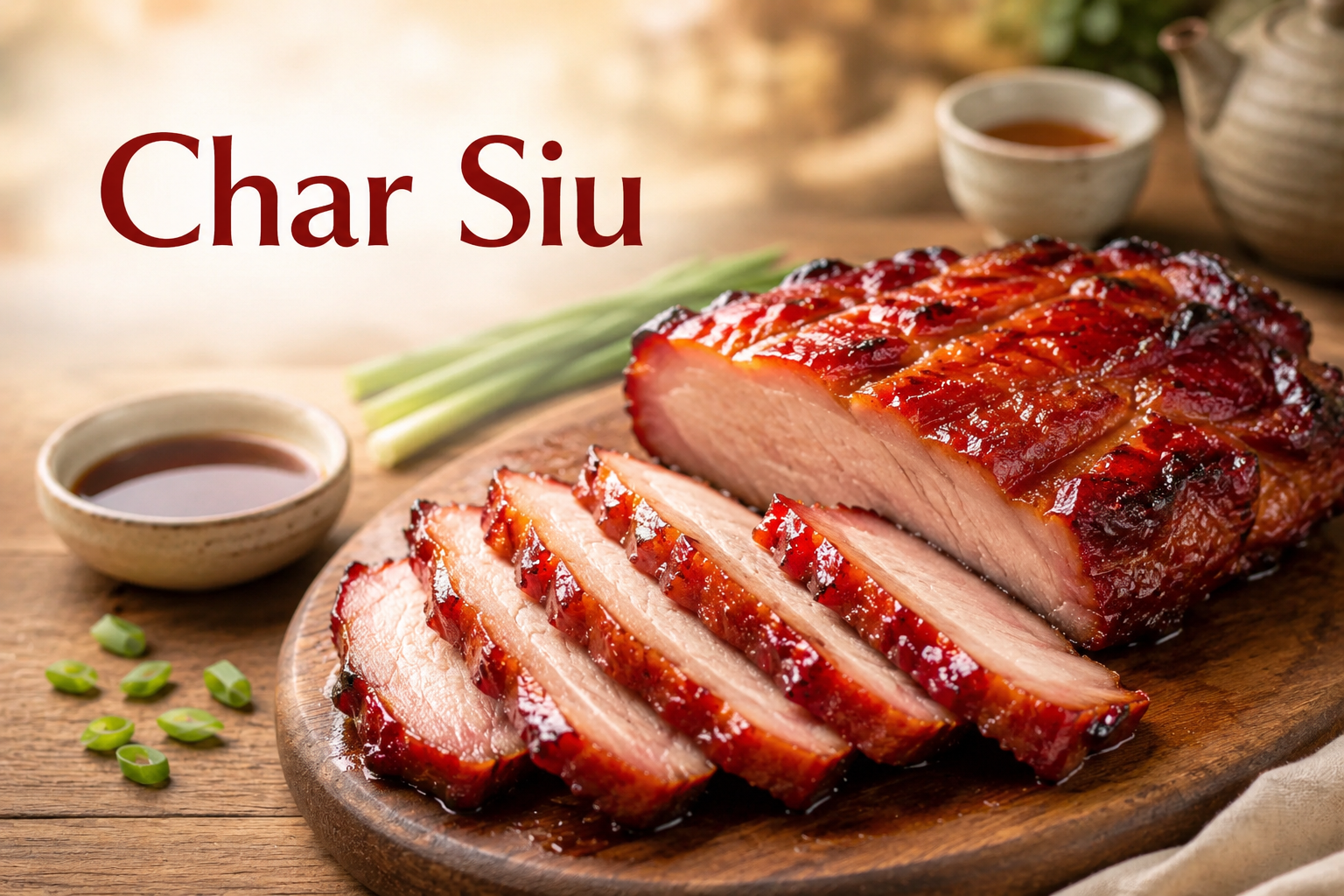
Walk through almost any neighbourhood in Guangdong or Hong Kong and you are likely to spot a siu mei shop with strips of glossy red pork hanging in the window. This is char siu, one of the most familiar and beloved forms of Cantonese roast meat.
Char siu appears everywhere—from grand Cantonese restaurants and busy cha chaan tengs to neighbourhood cafés, market stalls and modest family-run shops. Each kitchen has its own version. Some make it deeply caramelized and smoky, while others prefer it tender, juicy and coated in a generous layer of honey glaze.
Although char siu is often translated as “Chinese BBQ pork,” it is not defined by one fixed recipe. The cut of pork, the balance of fat and lean meat, the marinade and the roasting technique can all produce noticeably different results.
This guide introduces the main types of char siu, explains which pork cuts work best and provides a practical oven recipe that you can make at home.

What Is Char Siu?
The Cantonese name char siu, sometimes written as cha siu or 叉烧, literally refers to meat that is roasted on a fork or skewer.
Traditionally, long strips of marinated pork were pierced with metal forks and suspended inside a covered charcoal oven. The high heat roasted the meat while allowing its surface to caramelize. As the fat rendered, the pork became juicy inside and lightly charred around the edges.
Modern restaurants may use gas or electric roasting ovens, but the goal remains the same: tender pork with a sweet-and-savoury flavour, a shiny glaze and just enough caramelization to create those prized dark edges.
Good char siu should not simply taste sweet. It should have layers of soy sauce, fermented bean curd, garlic, warm spices and roasted pork, with a subtle fragrance from Chinese cooking wine.
The Main Types of Char Siu
One reason char siu can taste so different from one restaurant to another is the choice of meat. Cantonese cooks commonly classify it according to the pork cut and its fat-to-lean ratio.

1. Pork Shoulder Char Siu
Known in Cantonese cooking as mui tau char siu, this style is made from pork shoulder, particularly the well-marbled upper portion sometimes sold as pork collar, pork neck or blade shoulder.
Pork shoulder contains fine streaks of fat running through the muscle. During roasting, this marbling melts gradually and keeps the pork tender and moist.
For many char siu specialists, pork shoulder is the preferred cut because it offers the best balance of:
-
Tender meat
-
Rich pork flavour
-
Even marbling
-
Juicy texture
-
Crisp, caramelized edges
It is also the most forgiving option for home cooks because it is less likely to dry out than pork loin.
2. Pork Jowl or Underarm Char Siu
Sometimes called bat gin tin char siu, this less common variety uses meat from the front shoulder or underarm area of the pig.
The meat is firmer than heavily marbled pork shoulder but has a strong, distinctive pork flavour. When prepared properly, it produces char siu with a pleasantly substantial bite.
This style is particularly appealing to diners who enjoy meatier char siu rather than an especially soft or fatty version.
3. Pork Belly Char Siu
Pork belly char siu may also be called fatty char siu, faa char or fei char. It is made with alternating layers of fat and lean pork.
Depending on the cut, the ratio may be roughly 30 percent fat and 70 percent lean, or close to an even split. As the pork belly roasts, its fat renders into the surrounding meat, creating a soft, rich and almost buttery texture.
This is one of the most indulgent styles of char siu. It is especially good when served in smaller portions with steamed rice, noodles or blanched vegetables.
However, pork belly can become overly rich if the piece contains too much fat. Look for a cut with clearly defined, balanced layers.
4. Lean Char Siu
Lean char siu is usually prepared with pork loin, tenderloin or another low-fat cut. It has a firmer texture, a cleaner pork flavour and significantly less richness than shoulder or belly char siu.
This version is sometimes preferred by diners who want less visible fat. However, it is also the easiest type to overcook.
Because lean pork does not produce much rendered fat, the marinade and glaze become especially important. A good char siu sauce helps provide moisture, colour and flavour that the meat itself cannot supply.
What Is the Best Cut of Pork for Char Siu?
For home cooking, well-marbled pork shoulder is usually the best choice.

The ideal char siu is neither completely lean nor excessively fatty. Cantonese cooks often describe the preferred balance as half-fat, half-lean, although the phrase does not always indicate an exact 50-50 ratio. It generally means that the meat should contain enough fat to stay moist while still having plenty of lean pork.
When exposed to high heat, the fat melts and carries flavour through the meat. It also helps create juicy edges and protects the pork from drying out.
Look for boneless pork shoulder with visible marbling, then cut it into long strips approximately 4 to 5 centimetres thick. Avoid cutting the strips too thin, as they may dry out before the outside has time to caramelize.
If pork shoulder is unavailable, pork collar or a balanced piece of pork belly will also work well. Pork loin can be used, but it requires closer attention during cooking.
What Gives Char Siu Its Signature Flavour?
The soul of char siu lies in its marinade.
There is no single universal formula. Restaurants often protect their marinade recipes closely, and experienced roast-meat chefs adjust seasonings by sight, aroma and feel rather than relying entirely on measurements.
Nevertheless, traditional marinades frequently include a combination of:
-
Soy sauce
-
Oyster sauce
-
Hoisin sauce
-
Sugar or maltose
-
Garlic
-
Onion or shallot
-
Chinese five-spice powder
-
Red fermented bean curd
-
Chinese cooking wine
-
Honey or maltose for glazing
The result should taste sweet and savoury, with fermented depth and a gentle aroma of spices.
The Role of Rose Cooking Wine

One particularly distinctive ingredient is Chinese rose cooking wine, commonly known as mei kuei lu chiew or rose-flavoured liquor.
It is traditionally made with ingredients such as sorghum spirit and rose petals. Its fragrance is floral but restrained rather than perfume-like.
In Cantonese roast-meat cooking, rose wine serves several purposes. It helps reduce strong meat odours, adds complexity to the marinade and leaves a delicate aroma after roasting.
It is also used in other Cantonese specialties, including soy sauce chicken, roast duck, roast goose, Chinese sausage and preserved pork.
Rose cooking wine is optional for a basic home recipe, but even a small amount can make homemade char siu taste more like the version served in a traditional Cantonese barbecue shop.
Why Is Char Siu Red?

The red colour of char siu can come from several sources.
Traditional recipes may use red fermented bean curd and a small amount of red yeast rice powder, also called red fermented rice powder. These ingredients contribute both colour and flavour.
Some commercial char siu sauces or restaurant recipes may use food colouring to create a brighter red appearance. However, colour alone is not an indication of quality.
Well-roasted char siu can range from reddish brown to deep mahogany. More important than bright colour is the caramelized surface, glossy finish and darkened edges.
Easy Homemade Char Siu Recipe
Buying a bottle of prepared char siu sauce is the simplest option. Marinate the pork, roast it and apply a glaze near the end.
Making the marinade from scratch, however, is not much more difficult. The following recipe is designed for 500 grams of pork and can easily be doubled.
Ingredients
For the pork
-
500 g boneless pork shoulder
-
15 g oyster sauce
-
30 ml light soy sauce
-
15 ml Shaoxing wine or Chinese rose cooking wine
-
45 g granulated sugar
-
10 g finely minced garlic
-
½ teaspoon Chinese five-spice powder
-
1 teaspoon red yeast rice powder, optional
-
1 small cube red fermented bean curd
-
10 ml liquid from the fermented bean curd jar
For the glaze
-
1 tablespoon honey
-
1 tablespoon maltose or additional honey
-
1 tablespoon warm water
-
1 teaspoon reserved marinade that has been boiled thoroughly, optional
Maltose produces the classic thick, glassy surface often seen in Cantonese barbecue shops. Honey is easier to handle and still gives the pork an attractive shine.
Step 1: Cut the Pork
Cut the pork shoulder into long strips approximately 4 to 5 centimetres thick.
Try to cut along the natural shape of the meat rather than creating perfectly uniform blocks. A few thinner corners are desirable because they will caramelize more quickly and form flavourful charred edges.
Pat the pork dry with paper towel.
Step 2: Prepare the Marinade
Place the fermented bean curd in a mixing bowl and mash it into a smooth paste.
Add the oyster sauce, soy sauce, cooking wine, sugar, garlic, five-spice powder, red yeast rice powder and fermented bean curd liquid. Stir until the sugar is mostly dissolved.
Taste only before the marinade touches the raw pork. It should be noticeably strong, sweet and salty because its flavour will become milder once absorbed by the meat.
Step 3: Marinate the Pork
Add the pork and massage the marinade thoroughly into every surface.
Transfer everything to a sealed container or food-safe bag. Refrigerate for at least 8 hours, preferably overnight. Turn the pork once or twice if possible so that it marinates evenly.
Do not leave raw pork marinating at room temperature.
Step 4: Prepare the Oven
Remove the pork from the refrigerator about 20 to 30 minutes before roasting.
Preheat the oven to 220°C or 425°F.
Line a baking tray with foil to catch the dripping glaze. Place a wire rack over the tray, then arrange the pork strips on the rack with space between them.
Pour a small amount of hot water into the lined tray beneath the rack. This helps prevent sugary drippings from burning too quickly and producing excessive smoke.
Step 5: Roast the Char Siu
Roast the pork for approximately 15 minutes.
Turn the strips over, brush them lightly with marinade and roast for another 10 to 15 minutes. Cooking time will vary depending on the thickness of the meat and the performance of the oven.
Never brush cooked pork with marinade that has touched raw meat unless the marinade has first been brought to a full boil.
Step 6: Apply the Glaze
Mix the honey, maltose and warm water.
Brush the glaze generously over the pork, then roast for another 3 to 5 minutes. Turn the pork, glaze the other side and continue roasting until the surface is glossy and caramelized.
For darker edges, switch the oven to broil for the final 1 to 2 minutes. Watch closely—the sugar can move from caramelized to burned very quickly.
Use a digital food thermometer to check the thickest part of each strip. Health Canada recommends cooking pork pieces and whole cuts to an internal temperature of 71°C or 160°F.
Step 7: Rest and Slice
Let the char siu rest for 8 to 10 minutes before slicing.
Resting allows the juices to settle inside the meat. Slice too early and much of that moisture will run onto the cutting board.
Cut the pork across the grain into pieces about 5 millimetres thick. Spoon any clean, cooked glaze or tray juices over the top before serving.
How to Get Charred Edges Without Burning the Pork
The dark, slightly crisp edges are often the best part of char siu, but they should taste caramelized rather than bitter.
A few simple techniques make this easier:
Roast on a Wire Rack
Elevating the pork allows hot air to circulate around it. It also prevents the underside from sitting in liquid and becoming soft.
Add the Sweet Glaze Near the End
Honey and maltose burn faster than the meat cooks. Applying most of the glaze during the final stage gives the pork time to cook before its surface becomes dark.
Leave Some Uneven Edges
Perfectly shaped strips may look tidy, but irregular corners caramelize beautifully. Do not trim every thin edge away.
Use the Broiler Briefly
Broiling creates the intense surface heat associated with traditional roasting. One or two minutes is often enough.
Watch the Pork Continuously
Do not walk away once the glaze has been applied. The final stage moves quickly, particularly when honey, maltose or a large amount of sugar is used.
Common Char Siu Mistakes
Choosing Pork That Is Too Lean
Very lean pork may taste dry even when the seasoning is good. Use pork shoulder whenever possible, or reduce the cooking time for pork loin.
Cutting the Meat Too Thin
Thin strips cook quickly but may dry out before the glaze caramelizes. Thick, long strips produce a better contrast between juicy meat and roasted edges.
Marinating for Too Little Time
A quick coating gives the pork surface flavour but does not season the centre. Overnight marinating produces a noticeably better result.
Adding Too Much Five-Spice Powder
Five-spice should sit in the background. Too much can overwhelm the pork and make the char siu taste medicinal.
Glazing Too Early
A sugar-heavy glaze can burn before the pork is cooked. Roast first, then build the glossy coating in the final minutes.
Slicing Immediately
Freshly roasted char siu smells irresistible, but resting it briefly helps preserve its juices.
A Shortcut Using Bottled Char Siu Sauce

For the easiest possible version, use a prepared Cantonese char siu sauce.
Combine approximately three tablespoons of sauce with a small amount of soy sauce, minced garlic and Chinese cooking wine. Marinate 500 grams of pork shoulder overnight, then roast and glaze it using the same method described above.
Bottled sauce is especially useful when you cannot find fermented bean curd, red yeast rice powder or Chinese rose wine. You can still personalize it with honey, garlic, five-spice or a splash of cooking wine.
How to Serve Char Siu
Freshly roasted char siu can be served in many ways:
-
Over steamed jasmine rice
-
With wonton noodles
-
Inside steamed or baked char siu bao
-
In fried rice
-
With stir-fried noodles
-
Alongside blanched Chinese greens
-
In sandwiches or wraps
-
As a topping for congee
-
Added to clay pot rice
-
Served as part of a Cantonese roast-meat platter
For a simple meal, serve sliced char siu with hot rice, steamed gai lan and a spoonful of the cooked glaze.
Leftovers are particularly valuable. Slightly chilled char siu is easier to dice and works exceptionally well in fried rice, noodle dishes and fillings.

Final Thoughts
The best char siu begins with the right pork.
Homemade char siu may not emerge from a traditional charcoal roasting oven, but it can still capture what makes Cantonese BBQ pork so satisfying—a savoury centre, fragrant marinade, sticky surface and those slightly charred, intensely flavourful edges.


