
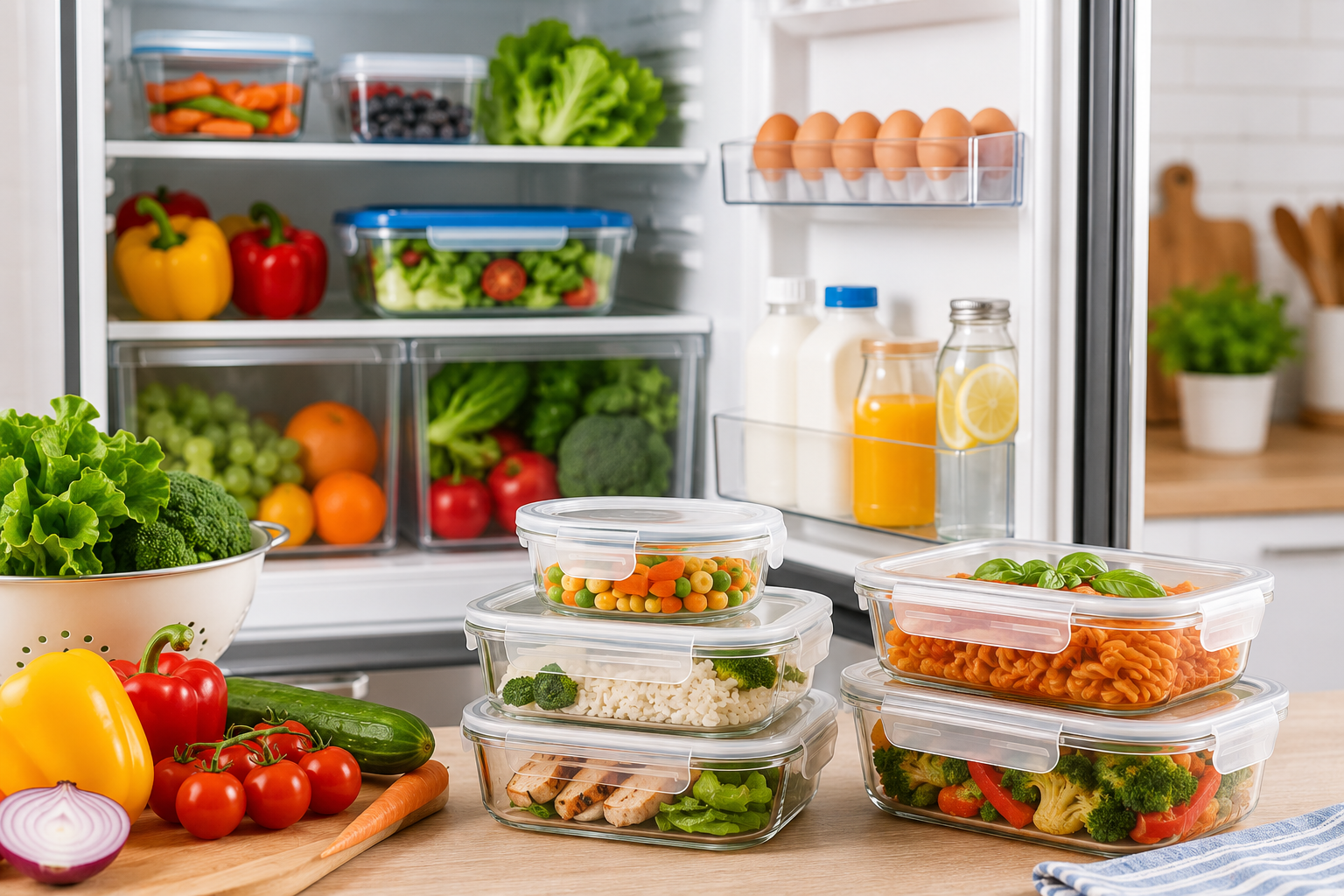
Keeping food in the refrigerator feels simple, but improper storage is one of the most common causes of food contamination at home. Many people assume that cold temperatures completely stop bacteria from growing. In reality, refrigeration only slows down bacterial activity. Some harmful microorganisms can still survive — and even multiply — inside your fridge.
Understanding proper refrigerator food storage is essential for maintaining food freshness, reducing food waste, and protecting your family from foodborne illness. From leftover vegetables and seafood to dairy products and cooked meals, different foods require different storage methods and timelines.

This guide explains how refrigerator temperature affects food safety, why leftovers can become risky when stored improperly, how nitrates and nitrites develop in vegetables, and how long common foods can safely stay in the fridge or freezer.
Why Proper Refrigerator Storage Matters
Most refrigerators operate between 2°C and 8°C (35°F–46°F). At these temperatures, the growth of many bacteria slows significantly. However, refrigeration does not completely eliminate bacteria.
Some cold-tolerant bacteria — known as psychrotrophic bacteria — can continue growing even at refrigeration temperatures. Common examples include:
- Listeria monocytogenes
- Salmonella
- Yersinia enterocolitica
- Certain Vibrio species found in seafood
Because of this, a refrigerator can actually become a hidden breeding ground for bacteria if food is stored too long, improperly sealed, or if the fridge is not cleaned regularly.
Freezers provide better protection because temperatures around -18°C (0°F) inhibit most bacterial growth. However, freezing does not completely sterilize food. Some bacteria and toxins can survive freezing temperatures and become active again once food is thawed.
Nitrates, Nitrites, and Vegetables: What You Should Know

Fresh vegetables naturally contain nitrates. Leafy greens typically have much higher nitrate levels than other vegetables because nitrates are part of how plants absorb nitrogen during growth.
Common vegetables with higher nitrate content include:
- Spinach
- Bok choy
- Chinese cabbage
- Amaranth greens
- Beetroot
Vegetables with lower nitrate levels generally include:
- Carrots
- Potatoes
- Onions
- Cucumbers
- Tomatoes
- Peas
On their own, nitrates are relatively stable. The concern comes when nitrates are converted into nitrites by bacteria or enzymes. Inside the human body, nitrites may react with certain compounds to form nitrosamines, substances that have been associated with cancer risk in animal studies.
The International Agency for Research on Cancer (IARC), under the World Health Organization, classified ingested nitrates or nitrites under conditions that promote endogenous nitrosation as “probably carcinogenic to humans” (Group 2A). However, evidence regarding nitrates or nitrites in food directly causing cancer in humans remains limited.
How Storage Temperature Affects Cooked Vegetables
Fresh vegetables naturally contain enzymes and microorganisms that can convert nitrates into nitrites over time. Research shows that both storage temperature and storage duration significantly affect this process.
Cooked vegetables behave differently.
Cooking changes the structure of plant enzymes, reducing their ability to convert nitrates into nitrites. However, once cooked food is exposed to air, utensils, or containers, bacteria can contaminate the food and continue converting nitrates into nitrites during storage.
Studies have shown that cooked cabbage left at room temperature for 48 hours may contain nitrite levels up to three times higher than cabbage stored in frozen conditions.
This is why proper refrigeration is important for leftover vegetables.
Best Practices for Storing Leftovers Safely

Food safety experts recommend following strict storage guidelines for leftovers:
- Refrigerate cooked food within 2 hours after cooking
- Keep refrigerator temperatures at 4°C (40°F) or below
- Store leftovers for no longer than 3 days
- Reheat leftovers thoroughly to an internal temperature of 75°C (167°F)
- Only reheat the portion you plan to eat
- Never reheat leftovers more than once
- Discard cooked food left at room temperature for over 4 hours
At freezing temperatures around -18°C, nitrate conversion essentially stops. Under refrigerated temperatures between 0°C and 4°C, the conversion rate becomes extremely slow.
In practical terms, properly refrigerated cooked vegetables stored overnight are generally considered safe, and nitrite levels do not rise significantly within 24 hours.
Refrigerator Food Safety Risks You Shouldn’t Ignore

1. Listeria Can Grow in the Fridge
Listeria is one of the most dangerous foodborne pathogens because it grows well in cold environments between 4°C and 10°C.
It is commonly found in:
- Processed deli meats
- Hot dogs
- Soft cheeses
- Ready-to-eat refrigerated foods
Symptoms may include:
- Fever
- Nausea
- Vomiting
- Diarrhea
- Joint pain
Healthy adults usually recover within a few days, but pregnant women, seniors, and immunocompromised individuals face much higher risks. Severe infections may lead to bloodstream infections, meningitis, miscarriage, or fetal complications.
2. Salmonella Can Survive Freezing
Salmonella frequently contaminates:
- Dairy products
- Meat
- Poultry
- Protein-rich foods
One problem with Salmonella contamination is that affected foods often look and smell normal.
Even at -18°C, Salmonella can remain viable for months. If contaminated food is not cooked thoroughly before consumption, it can cause diarrhea, gastroenteritis, and food poisoning.
3. Seafood Carries Hidden Bacterial Risks
Fish, shrimp, crab, and shellfish naturally contain Vibrio bacteria, which can tolerate cold temperatures and continue multiplying slowly in the refrigerator.
Improperly stored seafood may cause:
- Gastrointestinal infections
- Food poisoning
- Liver stress in vulnerable individuals
Because seafood spoils quickly, it should be consumed within 1–2 days under refrigeration.
4. Tofu and Soy Products Spoil Quickly
Soy products such as:
- Tofu
- Soy milk
- Bean curd
- Dried tofu
contain high moisture and protein levels, making them ideal environments for bacterial growth.
Testing has shown that refrigerated tofu stored longer than 24 hours may contain bacterial counts more than 10 times higher than when freshly opened.
For best safety and quality:
- Keep tofu sealed tightly
- Change soaking water daily if applicable
- Consume opened tofu quickly
5. Cold Dishes and Salads Can Become Unsafe
Cold dishes and marinated vegetables often skip high-temperature sterilization during preparation, meaning bacteria may already be present before refrigeration.
As storage time increases:
- Nitrite levels may rise
- Bacteria continue multiplying
- Food safety risks increase significantly
Salt and vinegar alone are not reliable preservatives in household refrigeration conditions.
Cold dishes stored longer than 24 hours should be treated cautiously.
How Long Can Food Stay in the Fridge?

Avoid Common Refrigerator Storage Mistakes
Don’t Use Thin Grocery Plastic Bags for Long-Term Food Storage
Many households use supermarket produce bags for storing leftovers or raw meat. This practice can create several problems.
Most grocery produce bags are made from PE plastic intended for short-term use. Non-food-grade plastic bags may release harmful substances when exposed to:
- Oils and fats
- Hot foods
- Temperatures above 80°C
In freezing environments, thin plastic bags may become brittle and crack, allowing bacteria and freezer burn to affect the food.
Instead, use:
- Food-grade freezer bags
- Airtight containers
- BPA-free food storage containers
- Vacuum-sealed packaging when possible
Tips for Better Refrigerator Food Safety

To improve food safety and reduce contamination risks:
- Keep refrigerator temperature at or below 4°C
- Freeze foods at -18°C when storing long-term
- Clean the refrigerator regularly
- Separate raw meat from ready-to-eat foods
- Label leftovers with dates
- Avoid overfilling the fridge to maintain airflow
- Store seafood and cooked foods on lower shelves
- Use airtight containers whenever possible


At Chefco, we understand that proper food storage is essential for both home kitchens and commercial foodservice operations. From commercial refrigerators and freezers to food storage containers and kitchen sanitation supplies, Chefco provides reliable equipment designed to help keep food fresher, safer, and better organized. Whether you operate a restaurant, café, catering business, or simply want to improve food safety practices at home, investing in quality refrigeration and storage solutions can make a major difference in maintaining food quality and reducing contamination risks.
