
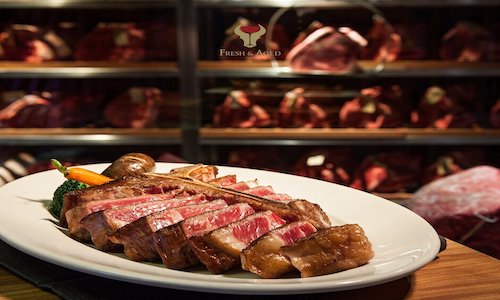

Dry-aged steak is known for its rich beefy flavor, tender texture, and distinctive nutty aroma. It is commonly found in premium steakhouses and specialty butcher shops, where large cuts of beef are aged under carefully controlled conditions before being trimmed and portioned into steaks.
But what exactly does “dry aged” mean, and why does dry-aged beef taste so different from regular steak? The answer comes down to time, temperature, airflow, and the natural changes that take place inside the meat during aging.
What Is Dry-Aged Steak?
Dry-aged steak is beef that has been stored uncovered in a temperature- and humidity-controlled environment for several weeks.
Rather than cutting fresh beef immediately into steaks, restaurants and butchers typically age larger cuts such as ribeye, strip loin, or prime rib. During this period, moisture slowly evaporates from the meat while naturally occurring enzymes begin breaking down muscle proteins.
These two processes create the characteristics dry-aged steak is famous for: a more concentrated beef flavor and a softer, more tender texture.
The outside of the beef gradually becomes dark, dry, and firm. Before the meat is cooked or sold, this dried outer layer is trimmed away, revealing the properly aged beef underneath.
Why Isn't Fresh Beef Always Better for Steak?

Freshness is usually associated with quality, but steak is slightly different.
Immediately after slaughter, muscle fibers naturally become firm during a process called rigor mortis. Beef therefore normally needs time to age before it reaches the tenderness people expect from a good steak.
Most beef sold today is wet-aged. During wet aging, beef is vacuum-sealed in plastic and refrigerated for a period of time. Natural enzymes gradually tenderize the meat while the vacuum packaging prevents moisture loss. Wet aging is efficient, economical, and widely used throughout the meat industry. Dry aging takes a different approach. Instead of sealing the beef inside a bag, the meat is exposed to circulating air inside a carefully controlled dry-aging environment. Moisture escapes from the beef, concentrating its flavor while enzymatic activity continues to tenderize the meat.
This is why dry-aged steak can develop flavors that regular wet-aged beef normally does not have.
How Does Dry Aging Work?

Dry aging requires much more than simply placing beef inside a refrigerator.
Professional dry-aging cabinets carefully control several important factors, including:
-
Temperature
The environment must remain cold enough to safely age the beef while allowing the natural aging process to continue. -
Humidity
Humidity must be controlled to manage moisture loss and prevent the surface from drying too quickly or too slowly. -
Air Circulation
Consistent airflow helps the beef dry evenly and creates the characteristic dry outer crust. -
Clean Environment
Because beef may remain inside the cabinet for several weeks, cleanliness and proper sanitation are extremely important.
Depending on the equipment and aging program, conditions can vary, but commercial dry-aging systems are generally maintained close to refrigeration temperatures with carefully managed humidity and airflow.
Over time, the meat gradually loses moisture while enzymes break down proteins inside the muscle. The result is beef with a denser texture, deeper flavor, and greater tenderness.
How Long Is Steak Dry Aged?
There is no single perfect aging period. The ideal amount of time depends on the cut of beef and the flavor the chef wants to achieve.
Around 14–21 days, the beef begins becoming noticeably more tender, although the dry-aged flavor may still be relatively mild.
At approximately 28 days, many steaks develop the classic dry-aged characteristics people expect: concentrated beef flavor with subtle buttery and nutty notes.
Between 35 and 45 days, those flavors become stronger and more complex.
Longer aging periods, such as 60 days or more, can create much more intense aromas and flavors that some people describe as nutty, earthy, funky, or even slightly cheese-like.
For many restaurants, approximately 28–45 days provides a good balance between tenderness, flavor development, and product yield.
What Does Dry-Aged Steak Taste Like?
One of the biggest reasons people choose dry-aged steak is flavor.
Compared with regular beef, dry-aged steak generally has a more concentrated and savory beef taste.
Depending on the aging period, you may also notice flavors described as:
- Buttery
- Nutty
- Roasted
- Earthy
- Slightly sweet
- Cheese-like or funky in heavily aged beef
The exact flavor depends on the cut, marbling, aging environment, and length of aging. A 28-day dry-aged ribeye, for example, will usually taste significantly milder than the same cut aged for 60 days.
Why Is Dry-Aged Steak More Expensive?
Dry-aged beef is considerably more expensive to produce than standard beef.
One reason is moisture loss. As the beef ages, water gradually evaporates from the meat, reducing its total weight. The dried exterior must also be trimmed away before the steak can be served. That means a restaurant or butcher may begin with a large piece of beef but end up with considerably less sellable product after aging and trimming.
There are also other costs involved. Dry aging requires dedicated refrigeration equipment, electricity, storage space, careful temperature and humidity control, regular monitoring, and proper sanitation. Most importantly, the beef must remain inside the aging cabinet for several weeks before the restaurant can sell it. For these reasons, dry aging is usually reserved for high-quality, well-marbled beef cuts that can justify the additional time and cost.
What Cuts of Beef Are Best for Dry Aging?

Dry aging works best with large cuts of beef that contain good marbling and enough exterior fat to protect the meat during aging.
Common choices include:
- Ribeye
- Bone-in rib roast
- Strip loin
- Short loin
- Prime rib
Large bone-in cuts are especially popular because the fat cap and bones help protect the meat while moisture evaporates from the exposed surfaces.
Individual steaks are generally not ideal for traditional dry aging because their high surface-area-to-volume ratio can result in excessive moisture loss and trimming waste.
Is Wagyu Always Dry Aged?
 Not necessarily.
Wagyu is famous for its exceptionally high level of marbling, but that does not mean it must be dry aged. In fact, some highly marbled Japanese Wagyu is served with relatively little aging because chefs want to preserve its delicate fat, sweetness, and soft texture. Other Wagyu and premium beef programs may use controlled aging to create a different flavor profile. Whether dry aging improves the beef therefore depends on the specific cut, fat content, aging technique, and desired result. Dry aging should be considered a preparation method rather than an automatic indicator of beef quality.
Dry-Aged vs. Wet-Aged Steak
Both dry aging and wet aging use time and natural enzymes to improve beef tenderness, but the results are different. Wet-aged beef remains sealed inside vacuum packaging, so very little moisture is lost. The flavor generally stays cleaner and closer to traditional fresh beef. Dry-aged beef is exposed to controlled airflow. Moisture slowly evaporates, which concentrates the beef flavor and allows distinctive dry-aged aromas to develop. Wet aging is more economical and therefore much more common. Dry aging requires more time, equipment, storage, and trimming, but it can produce flavors that wet aging normally cannot. Neither method is automatically better. It depends on the style of steak you prefer.
How Should You Cook Dry-Aged Steak?
Because dry-aged beef already has a strong natural flavor, it usually does not require complicated seasoning.
A simple preparation often works best. Salt the steak lightly before cooking, then sear it over high heat in a cast-iron pan, grill, or commercial broiler. Many steak lovers prefer dry-aged beef cooked medium-rare, although the ideal doneness ultimately comes down to personal preference. After cooking, allow the steak to rest briefly before slicing.
Heavy sauces are often unnecessary because they can overpower the flavors created during the aging process. Butter, coarse salt, black pepper, garlic, or fresh herbs are usually more than enough.
Is Dry-Aged Steak Safe?
Properly dry-aged beef can be safely prepared and served when the aging process is performed under professionally controlled conditions.
The key is maintaining appropriate temperature, humidity, airflow, sanitation, and food-handling practices throughout the aging period.
Dry aging should not be attempted by simply placing uncovered beef inside a normal household refrigerator. Regular refrigerators experience frequent temperature and humidity changes and are also exposed to other foods and microorganisms.
Restaurants and butcher shops that regularly produce dry-aged beef typically use dedicated dry-aging cabinets designed specifically for this purpose.
Why Restaurants Use Dry-Aging Cabinets
A professional dry-aging cabinet creates a controlled environment for aging large cuts of beef.
Depending on the model, these cabinets may provide precise temperature control, humidity management, continuous air circulation, filtration, UV sterilization systems, and glass doors that allow customers to see the aging process. For steakhouses, butcher shops, hotels, and premium restaurants, the cabinet can become part of the dining experience itself.
Customers can see large rib sections aging behind glass, often labeled with the cut, aging date, weight, or intended aging period. Beyond presentation, however, the cabinet's most important job is maintaining consistent aging conditions.
Final Thoughts
Dry aging transforms good beef through a combination of time, controlled moisture loss, and natural enzymatic activity.
Compared with standard wet-aged beef, dry-aged steak usually offers a more concentrated beef flavor together with distinctive buttery, nutty, and sometimes earthy characteristics.
The process also requires patience. Restaurants may need to store large cuts for 28, 35, 45 days—or even longer—while carefully controlling temperature, humidity, and airflow. That additional time, along with moisture loss and trimming waste, explains why dry-aged steak commands a premium price. For restaurants planning to offer dry-aged beef, reliable equipment is just as important as choosing the right meat.
 Chefco offers commercial dry-aging cabinets and restaurant equipment designed to help professional kitchens create and showcase premium dry-aged beef in a controlled environment.
