
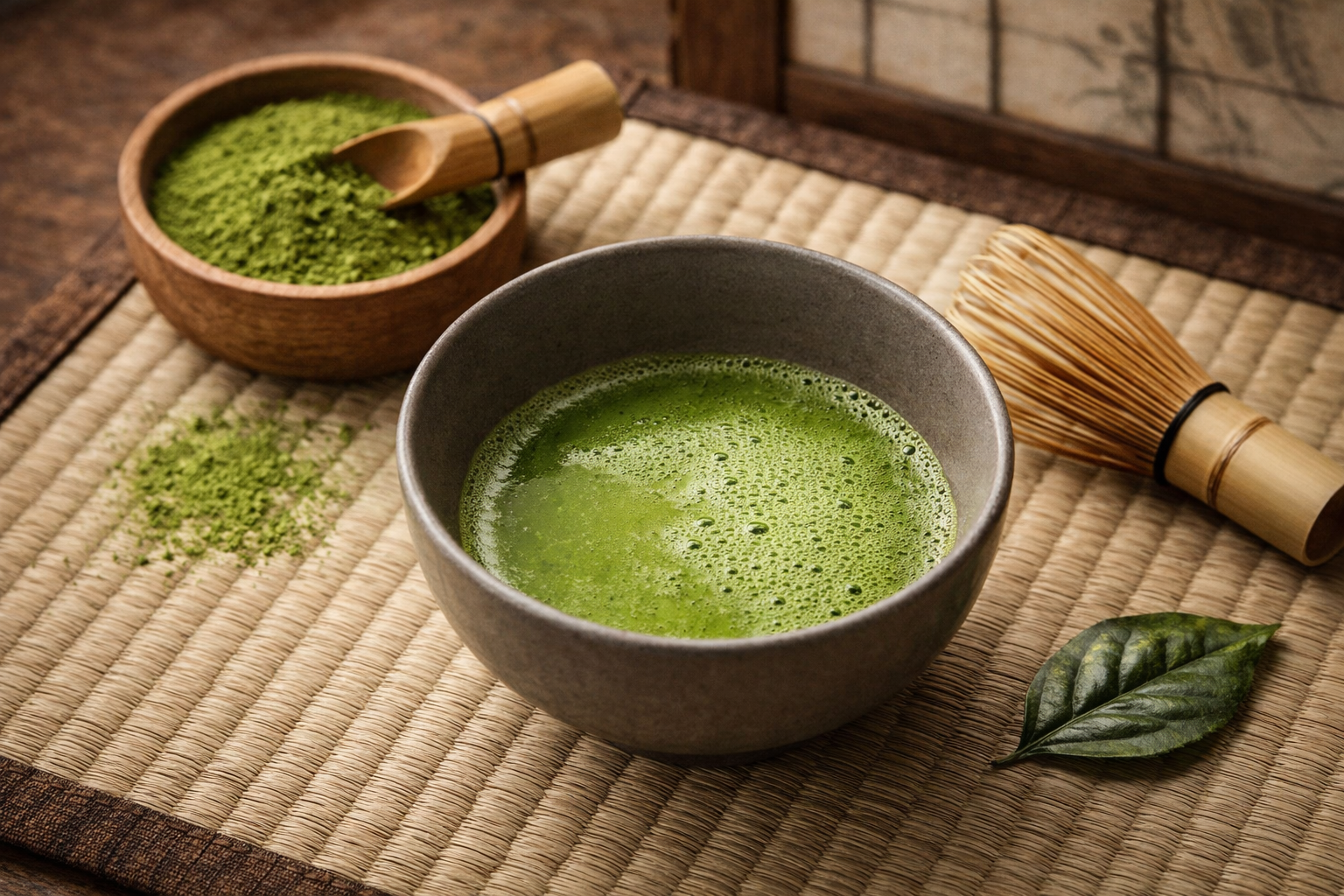
Matcha is both an ancient tradition and a modern wellness trend. Recognized for its vivid green color, fine powder texture, and unique balance of caffeine and L-theanine, matcha has become a staple in cafés, bakeries, and home kitchens around the world.
Although many people associate matcha exclusively with Japan, its origins trace back much further — to ancient China. From ceremonial tea rituals to matcha lattes and desserts, this guide explores matcha’s history, grades, nutrition, and everyday uses.

What Is Matcha?
Matcha is a finely ground powder made from whole green tea leaves. Unlike traditional green tea, where leaves are steeped and discarded, matcha is fully consumed — delivering a higher concentration of nutrients, antioxidants, and flavor.
The English word “matcha” comes directly from Japanese pronunciation, reflecting its central role in Japanese tea culture. However, the story begins earlier.
The True Origins of Matcha: From China to Japan

Early Chinese Roots
Powdered tea first appeared in China during the Wei and Jin Dynasties, gained popularity in the Tang Dynasty, and flourished during the Song Dynasty.
Historical records describe tea leaves being:
-
Steamed
-
Dried
-
Roasted
-
Ground into a fine powder
-
Whisked with hot water before drinking
This method, known as “dian cha” (点茶), was revolutionary at the time and represents the earliest form of matcha.
Arrival in Japan
During the Song Dynasty, this tea preparation style was introduced to Japan. Over centuries, Japanese monks refined the process, simplifying the technique and preserving the tea’s natural bitterness — a defining feature of modern matcha.
Today’s Japanese matcha evolved from this Chinese foundation, becoming a cornerstone of Japanese tea ceremonies and a symbol of mindfulness and precision.
Matcha Nutrition & Health Benefits
Because matcha uses the entire tea leaf, its nutritional value is significantly higher than brewed green tea.
Key Nutrients in Matcha
-
Catechins (especially EGCG)
-
L-theanine
-
Caffeine
-
Chlorophyll
-
Vitamins A, C, E
-
Dietary fiber
Major Health Benefits of Matcha
Powerful Antioxidant Support
Matcha contains up to 10× more antioxidants than regular green tea. EGCG helps neutralize free radicals, protect skin from UV damage, and slow signs of aging.
Boosts Metabolism & Fat Burning
The combination of caffeine and catechins increases fat oxidation and metabolic rate, making matcha popular before workouts.
Calm, Focused Energy
Unlike coffee, matcha delivers steady energy without jitters. L-theanine promotes calm concentration, stress reduction, and mental clarity.
Heart & Cholesterol Health
Studies suggest matcha may help lower LDL (bad) cholesterol, support healthy blood pressure, and reduce cardiovascular risk.
Natural Detox & Gut Health
High chlorophyll content supports detoxification, while fiber aids digestion and gut balance.
Immune & Oral Health
Matcha’s antibacterial properties help freshen breath and support oral hygiene.
Caffeine & Safety Notes
-
Contains less caffeine than coffee, but more than regular green tea
-
Avoid excessive intake if caffeine-sensitive
-
Not recommended on an empty stomach
-
Pregnant individuals or those with heart, kidney, or sleep disorders should consult a healthcare provider
Tip: Choose pure, unsweetened matcha powder for maximum health benefits.
Understanding Matcha Grades (No Official Certification)

There is no official governing body that certifies matcha grades in Japan. Terms like ceremonial, premium, and culinary are marketing classifications, and standards vary by producer.
That said, the differences are real and practical.
Ceremonial Grade Matcha
What It Is
Made from the youngest first-harvest tea leaves. Plants are shade-grown for 20–30 days to boost chlorophyll and L-theanine. Stems and veins are removed, and the leaves are stone-ground into an ultra-fine powder.
Flavor & Appearance
-
Bright, vibrant green
-
Naturally sweet, rich umami
-
Smooth, creamy texture
-
No bitterness
Best Use
-
Traditional whisked matcha
-
Drinking plain with hot water
Premium Grade Matcha
What It Is
A blend of first and second harvest leaves. Less refined than ceremonial grade, but still high quality and more affordable.
Flavor & Appearance
-
Deep green color
-
Slight bitterness and astringency
-
Stronger flavor profile
Best Use
-
Matcha lattes
-
Smoothies
-
Mixed beverages
Culinary (Cooking) Grade Matcha
What It Is
Made from later-harvest leaves with higher catechin content. Ground more quickly, resulting in a coarser texture. Culinary grade isn’t “low quality” — it’s simply designed to stand out when mixed with other ingredients.
Flavor & Appearance
-
Dark or yellow-green color
-
Bold, bitter, earthy taste
-
Grainier texture
Best Use
-
Baking and cooking
-
Cookies, cakes, brownies
-
Ice cream, sauces, savory dishes
How to Use Matcha in Drinks & Baking

Matcha Latte (Classic Café Favorite)
A matcha latte combines earthy tea flavor with creamy milk for a smooth, comforting drink.
Ingredients
-
Matcha powder (ceremonial or premium)
-
Hot water
-
Milk (dairy or plant-based)
-
Sweetener (optional)
How to Make
-
Sift matcha to remove clumps
-
Add hot water and whisk in a “W” motion until foamy
-
Steam or froth milk
-
Pour milk into matcha and enjoy
Matcha in Baking & Desserts
Culinary-grade matcha is ideal for:
-
Matcha cookies and cakes
-
Brownies and muffins
-
Ice cream and cheesecake
-
Pancakes, bread, and sauces
It provides natural green color, balanced bitterness, and a distinctive tea aroma.
Why Matcha Is a Global Trend
Matcha’s popularity continues to rise due to:
-
Wellness and functional beverages
-
Café culture and social media aesthetics
-
Demand for natural antioxidants
-
Versatility in food and drink
From traditional tea bowls to modern bakeries, matcha bridges ancient culture and contemporary taste.
Final Thoughts
Matcha is far more than a green tea powder. It is a centuries-old tradition, a nutritional powerhouse, and a versatile culinary ingredient. Whether you enjoy it whisked, blended, or baked, understanding its origins, grades, and uses helps you choose the right matcha for every purpose.
Matcha Tools & Japanese Kitchenware from Chefco
Whether you’re preparing matcha the traditional way or incorporating it into modern café drinks and desserts, having the right tools makes a difference.


Chefco offers a wide selection of Japanese kitchen tools, including essential matcha accessories such as:
-
Matcha bowls (chawan)
-
Bamboo matcha whisks (chasen)
-
Whisk holders and tea accessories
In addition to matcha tools, Chefco supplies professional Japanese cookware and restaurant equipment for cafés, bakeries, and food businesses across Canada — making it easy to source everything you need in one place.
