
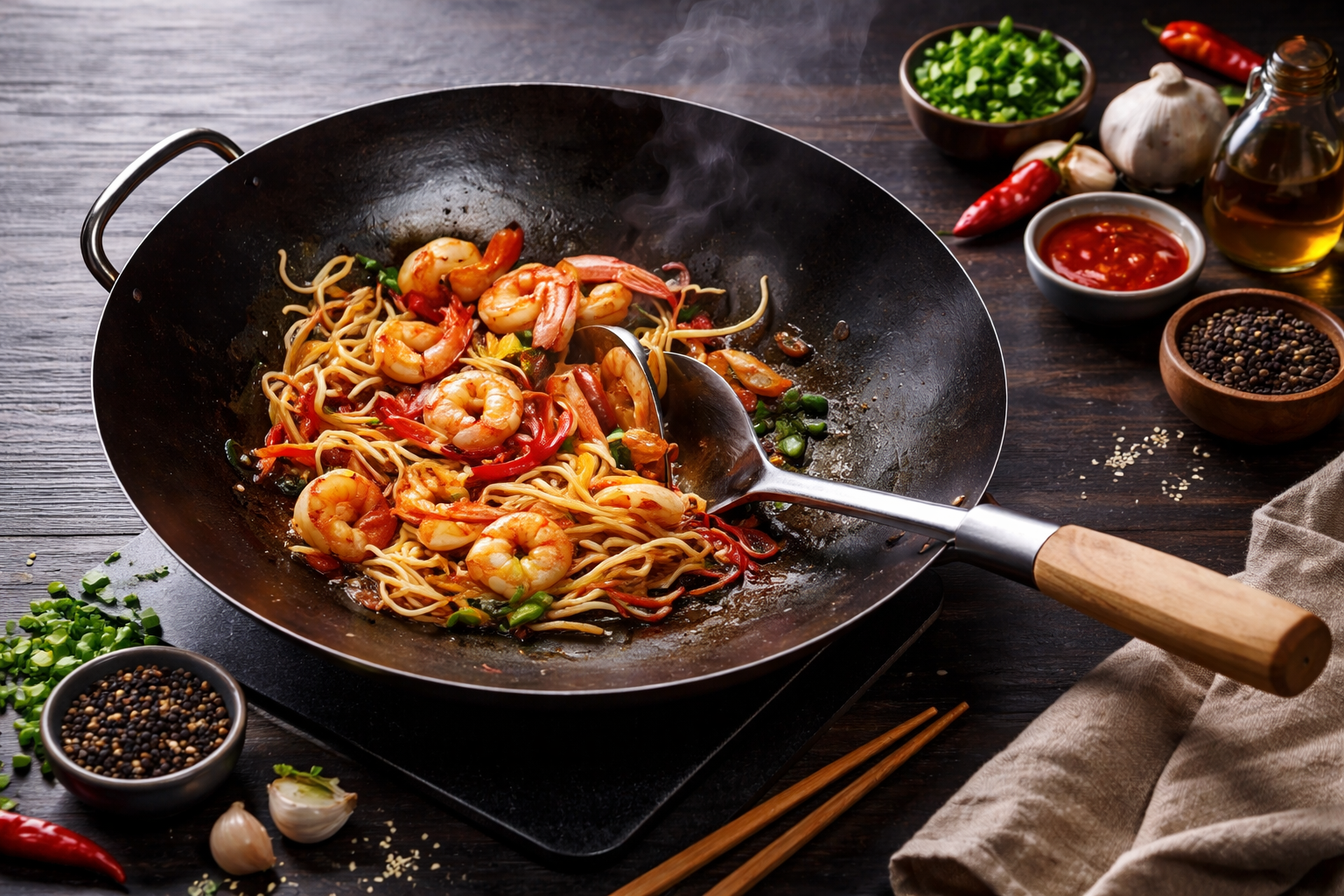

With so many cookware options available today, choosing the right wok can feel overwhelming. Whether you're cooking at home or equipping a commercial kitchen, understanding the types of woks and identifying the best wok material for your cooking style is essential.
Just like selecting cookware for a restaurant, the key lies in heat performance, durability, maintenance, and how well the wok supports your cooking technique. This guide will help you understand how to choose a wok based on material, usage, and long-term performance.
Types of Woks by Material
When exploring the different types of woks, the material plays the most important role in performance and cooking results.

1. Cast Iron Wok
Cast iron woks are known for exceptional heat retention and even heat distribution. They are ideal for:
-
Slow cooking
-
Braising
-
Deep frying
-
Maintaining steady temperatures
However, they are heavy and take longer to heat up. Like other cast iron cookware, they require seasoning to build a natural nonstick surface and prevent rust.
Best for: Chefs who value heat stability over speed.

2. Carbon Steel Wok (Most Recommended)
If you’re looking for the best wok material for authentic stir-frying, carbon steel is widely considered the top choice.
Carbon steel woks:
-
Heat up extremely fast
-
Respond quickly to temperature changes
-
Are lightweight and easy to handle
-
Develop natural nonstick properties over time
This is the material used in most professional Asian kitchens because it creates the signature “wok hei” (breath of the wok) flavor when cooking at high heat.
Best for: High-heat stir-frying and traditional Asian cooking.

3. Aluminum Wok
Aluminum woks are lightweight and heat quickly and evenly. They are often affordable and easy to handle.
However:
-
They can react with acidic foods
-
They may corrode over time
-
They can retain flavors between dishes
Because of these limitations, aluminum is less common in professional kitchens.
Best for: Casual home cooking with careful ingredient selection.

4. Copper Wok
Copper offers excellent heat conductivity — even better than aluminum. It heats quickly and distributes heat evenly.
However:
-
It is prone to corrosion
-
It requires maintenance
-
It is often lined with stainless steel
Due to cost and upkeep, copper woks are less practical for everyday use.
Best for: Specialty or display kitchens.

5. Stainless Steel Wok
Stainless steel woks are durable, rust-resistant, and easy to clean. They are ideal for kitchens that prioritize hygiene and appearance.
However:
-
Heat conductivity is lower
-
They may develop hot spots
-
Food can stick without proper technique
They are often used in modern or open kitchens due to their polished look.
Best for: Easy maintenance and visible cooking spaces.

6. Nonstick Wok
Nonstick woks are beginner-friendly and require less oil, making them ideal for low-fat cooking.
Advantages:
-
Easy to clean
-
Less sticking
-
Minimal seasoning required
However:
-
Coatings wear down over time
-
Not suitable for very high heat
-
Shorter lifespan in commercial settings
Best for: Home cooks or light-duty use.

How to Choose a Wok for Your Kitchen
When deciding how to choose a wok, consider these factors:
1. Cooking Style
-
High-heat stir-frying → Carbon steel
-
Slow cooking or braising → Cast iron
-
Low-oil cooking → Nonstick
2. Heat Source
-
Gas stove → Round-bottom wok preferred
-
Electric or induction → Flat-bottom wok
3. Weight & Handling
-
Lightweight and responsive → Carbon steel
-
Heavy but stable → Cast iron
4. Maintenance Level
-
Low maintenance → Stainless steel or nonstick
-
Willing to season and care → Carbon steel or cast iron
What Is the Best Wok Material?
For most home cooks and professional kitchens, carbon steel is considered the best wok material because it offers:
-
Fast heating
-
Excellent temperature control
-
Durability
-
Authentic cooking results
That said, the best choice ultimately depends on your cooking goals and how much maintenance you're comfortable with.


