
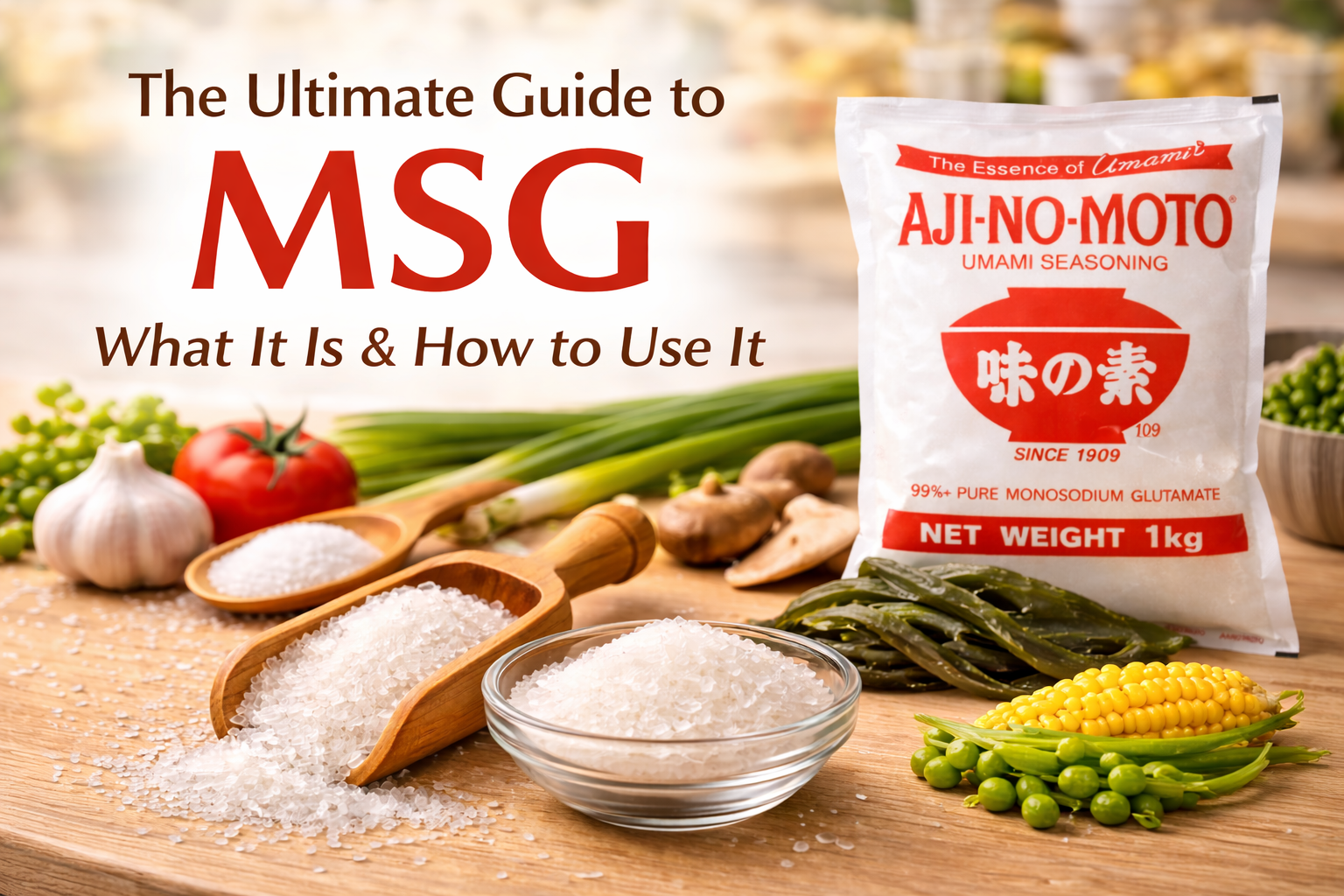
Monosodium glutamate (MSG) is one of the most widely used food additives in the world, yet it is also one of the most misunderstood. Frequently associated with Chinese cuisine and umami-rich dishes, MSG has sparked debates about health, safety, and its role in cooking.
In reality, MSG is a naturally occurring compound found in many foods we eat every day. Understanding its origins, how it is produced, and how chefs use it can help separate scientific facts from myths.
This guide explains the history of MSG, its health facts, how it is manufactured, and how it enhances flavor in Chinese cooking.

The Discovery of MSG and the Birth of Umami
The story of MSG begins in the early 20th century with Japanese scientist Kikunae Ikeda, a professor at Tokyo Imperial University.
According to historical accounts, Ikeda’s wife prepared a pot of kombu (kelp) soup. After the seaweed had been boiled for an extended period, white crystalline substances formed on the kelp. Curious about the taste, Ikeda analyzed the crystals and discovered that they produced a flavor unlike the four traditional tastes—sweet, sour, bitter, and salty.
He named this new taste “umami,” meaning “savory deliciousness.”
The compound responsible for this taste was identified as monosodium glutamate (MSG), the sodium salt of glutamic acid. This discovery eventually led to the commercial production of MSG as a seasoning used to enhance flavor in cooking.
Natural Sources of MSG

A common misconception is that MSG is purely artificial. In reality, glutamate occurs naturally in many foods, including:
-
Tomatoes
-
Cheese and dairy products
-
Mushrooms
-
Corn
-
Green peas
-
Meat and poultry
-
Seafood
-
Ham and cured meats
These foods naturally contain glutamic acid or glutamate, which contributes to their savory taste.
In fact, humans have been consuming glutamate for thousands of years through natural foods, long before MSG became a commercial seasoning.
How MSG Is Manufactured Today

In the past, MSG was extracted from seaweed or produced by hydrolyzing wheat gluten. However, modern production methods are far more efficient and sustainable.
Today, MSG is typically produced through microbial fermentation, a process similar to making yogurt, beer, or soy sauce.
The basic steps include:
-
Raw materials such as starch, sugar cane, or molasses are prepared.
-
Microorganisms ferment the sugars, producing glutamic acid.
-
The glutamic acid is neutralized with sodium to form monosodium glutamate.
-
The product is then purified and crystallized into the familiar white granules.
This fermentation process is widely used in food science and is considered safe and environmentally efficient.
Health Facts About MSG
Scientific research has repeatedly shown that MSG is safe for consumption when used in normal amounts.
According to studies referenced by international organizations:
-
The FAO (Food and Agriculture Organization) and WHO Joint Expert Committee on Food Additives (JECFA) have evaluated MSG and determined that it can be safely used in food without a strict daily intake limit.
-
The body processes glutamate from MSG the same way it processes glutamate from natural foods.
After consumption, monosodium glutamate breaks down into glutamic acid, which is a key amino acid involved in protein metabolism.
Approximately 90% of glutamate consumed can be absorbed and used by the body, contributing to normal protein synthesis.
Daily Glutamate Intake from Natural Foods
The U.S. Food and Drug Administration (FDA) notes that adults typically consume around:
-
13 grams of glutamate naturally from protein-rich foods daily
-
Only about 0.55 grams from added MSG
Importantly, the human body does not distinguish between glutamate from MSG and glutamate naturally present in food. Both are metabolized in the digestive system in the same way.
MSG Sensitivity and Sodium Considerations
Although MSG is considered safe for most people, a small number of individuals may experience temporary symptoms after consuming large amounts of MSG. This phenomenon is sometimes referred to as MSG Symptom Complex.
Possible symptoms may include:
-
Headache
-
Nausea
-
Facial flushing
-
Rapid heartbeat
These reactions are rare and typically mild.
People with hypertension, heart disease, or kidney conditions who need to restrict sodium intake should also be mindful of MSG consumption. While MSG contains about 13% sodium—much lower than table salt (around 39%), it still contributes to total sodium intake.
As with any seasoning, moderation is key.
MSG and Umami in Chinese Cuisine
Chinese cuisine is known for its complex balance of flavors. While umami is important, it is only one dimension of Chinese seasoning, which also includes sweet, salty, sour, bitter, and aromatic elements.
Historically, chefs relied on slow-simmered stocks and broths to enhance umami. However, these broths can dilute other flavors or alter the natural taste of ingredients.
MSG provides chefs with another option.
By adding MSG, cooks can increase the umami intensity of a dish without changing its color, aroma, or texture. In this sense, MSG functions like a “pure umami enhancer,” allowing chefs greater flexibility when balancing flavors.
Modern flavor science has also introduced other umami compounds such as:
-
Disodium inosinate
-
Disodium guanylate
These ingredients often work together with MSG to create a stronger savory taste.

When Should You Add MSG During Cooking?
The timing of adding MSG can affect its flavor performance.
For stir-fry dishes or soups, MSG is best added near the end of cooking or right before serving.
The ideal temperature for MSG dissolution is around 70–90°C (158–194°F). At this temperature range, MSG dissolves easily and produces the strongest umami flavor.
However, when exposed to temperatures above 120°C (248°F) for extended periods—such as during deep frying—MSG can degrade and lose its flavor-enhancing properties.
For this reason, many chefs prefer to add MSG after the dish is finished cooking.
When MSG Is Unnecessary
MSG can enhance flavor, but it is not always needed.
Certain ingredients already contain natural glutamate, including:
-
Meat
-
Eggs
-
Mushrooms
-
Seafood
When these ingredients are cooked with salt and heat, they naturally release glutamate and produce strong umami flavors.
Similarly, dishes that are very sweet or highly acidic may not benefit from MSG.
Examples include:
-
Sweet-and-sour pork
-
Sugar-glazed dishes
-
Vinegar-heavy stir-fries
Sugar already enhances flavor perception, while high acidity can reduce MSG’s solubility and diminish its umami effect.
MSG vs Chicken Powder
In many Asian supermarkets, you will often see MSG and chicken powder sold side by side.
While both products contain monosodium glutamate, they are not identical.
MSG
-
Usually contains 80% or more monosodium glutamate
-
Provides a clean, direct umami flavor
-
Used as a pure flavor enhancer
Chicken Powder
-
A compound seasoning
-
Made from MSG, salt, sugar, chicken extract, and flavor nucleotides
-
Produces a richer and more complex savory taste
Because chicken powder includes additional flavor components, it often delivers a stronger and more layered flavor profile than MSG alone.
Final Thoughts
Despite decades of controversy, scientific evidence consistently shows that MSG is safe for most people and naturally related to compounds already present in many foods.
Rather than being harmful, MSG simply enhances the umami taste that humans naturally enjoy. When used correctly, it can help chefs highlight flavors without overwhelming other ingredients.


For home cooks and professional kitchens alike, having the right condiments and seasonings is essential for creating balanced and flavorful meals. Chefco offers a wide selection of kitchen condiments, spices, and food seasonings—including products like MSG and other flavor enhancers—designed to support restaurants, chefs, and cooking enthusiasts in building authentic and delicious dishes.
